BonBonDrop
I found myself squatting in the bead aisle of a dollar store for a solid thirty minutes. A forty-something fitness enthusiast in his prime, crouching among craft supplies like it was leg day at the gym.
Let me cut to the chase.
The Japanese economy is stagnating, yet a 550-yen sticker is flying off the shelves. This is not a contradiction. In fact, it is an economically flawless consumption behavior.
Today, I will be dissecting the social phenomenon triggered by Sunstar Stationery's "Bonbon Drop Seal" — at a ridiculously grand scale of "So how should we live our lives?"
What Even Is a Bonbon Drop Seal?
Let me explain it in three seconds for those who have no idea.
It is a puffy, three-dimensional sticker.
That is all.
No, seriously, that is literally all it is.
And yet this sticker, retailing at 550 yen, has crowned itself as the undisputed king of "smartphone case decoration" among young consumers, spawning an entire ecosystem in the process.
You take a clear smartphone case as your canvas, and fill it with these stickers like a puzzle.
Start with the big ones for the layout, then pack the gaps with the tiny ones.
Finish it off by coating the edges with a top coat from a hundred-yen shop, and hold your breath for three whole minutes while it dries.
This "Do Not Touch for Three Minutes" rule is enforced within the community with the solemnity of a constitutional amendment. Absolutely delightful.
The very generation that screams about "time performance" all day long is sitting there in dead silence for three minutes.
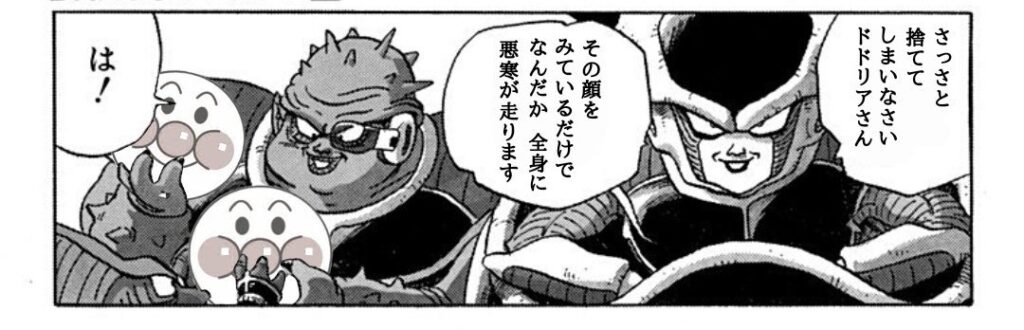
"Zarbon-san, just stick it on already!"
The Brutal Cost Efficiency That Demolished Economics
Let us pause and crunch the numbers.
- Bonbon Drop Seal: ¥550
- Clear smartphone case (Daiso): ¥110
- Hook charm (Seria): ¥110
- Top coat (Can Do): ¥110
- Extra beads (Seria): ¥110
Grand total: ¥990.
Nine hundred and ninety yen.
That is all it takes to create "the one and only original smartphone case in the world."
Considering that designer cases on the market run anywhere from ¥3,000 to ¥10,000, this price disruption is borderline insane.
On top of that, store-bought cases come with the risk of matching someone else's.
A ¥990 DIY case? Absolutely zero chance of overlap.
990 ÷ 365 days = roughly ¥2.7 per day.
For a mere ¥2.7 a day, you are purchasing the self-expression of "I am me."
A Starbucks Frappuccino at ¥680 vanishes into your stomach in thirty minutes.
A Bonbon Drop Seal smartphone case? The time spent choosing materials, the time spent crafting, the time spent carrying it around, the time spent showing it off on social media — every single moment can be recouped as "an experience."
At this point, this belongs in an economics textbook.
Here is my own case, decorated with all the passion I could muster. ❤️
The "Lipstick Effect" of the Reiwa Era Turned Out to Be a Sticker
There is a concept in economics called the "Lipstick Effect."
During a recession, consumers cut back on big-ticket purchases and instead splurge on affordable little luxuries.
Once upon a time, that meant high-end lipstick.
In Reiwa-era Japan, it turned out to be a 550-yen puffy sticker.
Think about it.
Real wages have flatlined. Prices keep rising. Mortgage rates are creeping up.
A car? Out of the question. Overseas travel? Not happening. A designer handbag? Absolutely not.
But human beings are creatures that break down without some kind of "treat for myself."
Saving, saving, saving.
Save too aggressively, and you contract a brand-new illness called "frugality fatigue."
The prescription? A 550-yen sticker.
This is not escapism.
It is an exceptionally rational investment decision designed to maximize psychological returns under economic constraints.
An ROI that would leave Warren Buffett speechless. Probably.
"Oshi-katsu" × Stickers = Nuclear Fusion
When this sticker merges with "oshi-katsu" — the act of passionately supporting your favorite idol or character — it triggers nuclear fusion.
You slip your oshi's trading card behind a clear case.
You frame it with Bonbon Drop Seals like an ornate picture frame.
Done. A one-of-a-kind "shrine to your oshi" descends upon the back of your smartphone.
There is a world of difference between "simply carrying around your oshi's trading card" and "enshrining it in the solemn grandeur of Bonbon Drop Seals."
This is no longer fandom. This is faith.
And then Sunstar Stationery went and collaborated with Sumikko Gurashi, dressing up Ebiten no Shippo in an idol costume.
Imagine: your oshi's trading card, surrounded by Sumikko characters in idol outfits.
Your oshi, surrounded by more oshi.
A double-layered context. A nested structure.
In English, you would call it "a metaphor within a metaphor." *The kind of construct that would show up in a Grade 1 Eiken reading passage.
The Flash Photography "Cheat Code" for Aesthetic Supremacy
A completed smartphone case looks reasonably cute when you photograph it normally.
But the veterans of social media discovered something.
Turn on the camera flash, and the brilliance doubles.
The sheen of the top coat, the shimmer of the beads, the three-dimensional pop of the stickers.
All of it becomes "excessively beautiful" under flash lighting.
A digital image more beautiful than reality is born.
Likes explode.
"That is adorable! How did you make it?" "Which hundred-yen store did you get the parts from?" — the comments pour in.
New consumers flood into the ecosystem.
The infinite loop of validation is complete.
This is textbook "viral loop" straight out of a marketing manual. And the advertising budget? Zero. Consumers create the content on their own and distribute it on their own.
I bet the marketing team at Sunstar Stationery is fist-pumping as we speak.
So, How Should We Live? — The Optimal Solution for Social Consumption Behavior
The preamble has dragged on for an absurdly long time, but here is where the real discussion begins.
I am going to lay down three optimal solutions for "consumption in the modern era," as taught to us by the Bonbon Drop Seal phenomenon.
Optimal Solution #1: "Do Not Buy Finished Products. Buy Raw Materials."
This is the single biggest takeaway.
Consumers no longer crave "a perfectly completed product."
They crave "a blank canvas they can intervene in."
A ¥990 set of raw materials delivers a higher psychological return than a ¥3,000 ready-made case.
Why?
It is what behavioral economics calls the "IKEA Effect."
An IKEA shelf you assembled yourself generates more attachment than an identical pre-built shelf.
A smartphone case where you chose the layout, filled in the gaps, waited three minutes, and attached your favorite charm holds more subjective value than a luxury branded case worth tens of thousands of yen.
In other words, what we should focus on in our daily consumption is not "the price of the finished product" but "the cost-performance of materials with room for personal intervention."
Meal kits, DIY furniture, customizable gadgets.
Choose products that leave room for your own hands. That alone will send your happiness skyrocketing.
Optimal Solution #2: "Judge Your Consumption by Experience Time ÷ Price."
Frappuccino ¥680 ÷ 30 minutes of experience = ¥22.7 per minute.
Bonbon Drop Seal ¥990 ÷ experience time (30 minutes choosing materials + 60 minutes crafting + 365 days carrying it around) = so cheap it defies calculation.
When you measure by "happiness cost per minute," DIY-type consumption wins by a landslide.
Expensive purchases are not inherently bad.
"Expensive purchases that evaporate in an instant" — those are the dangerous ones.
If you are going to spend the same amount of money, channel it toward consumption where "the process is enjoyable and the result endures."
That is the essence of smart spending in the Reiwa era.
Optimal Solution #3: "Use 'Can I Share This on Social Media?' as Your Litmus Test."
The strength of Bonbon Drop Seals is that the finished product is "Instagrammable."
In other words, the act of consumption converts into social media content.
Consumption → Creation → Completion → Photography → Posting → Validation → Desire for the next purchase.
When this loop circulates, your consumption is an "investment."
When the loop stalls, your consumption is "waste."
I am not telling you to go chase validation on social media.
"Am I satisfied enough that I would want to show this to someone?"
That is the simplest criterion for determining whether your spending was the right call.
Future Forecast: What Gets "Bonbon-ified" Next? (A Tangent)
This trend will not stop at smartphone cases.
Allow me to prophesy the domains it will inevitably spill into.
Keyboards. Custom keyboard-building is already trending at "fancypods Harajuku" in the heart of Harajuku. As an HHKB user, I would like to offer my heart to this cause. *Attack on Titan style.
Medicine notebook cases. Already covered by Trepo. A future where "That is so cute!" echoes through hospital waiting rooms. Medical costs remain unchanged, but motivation to visit the doctor goes up. And Japan's elderly population dwarfs the young.
Textbook covers. As a certified Grade 1 Eiken instructor, I will state this with absolute conviction. The moment middle schoolers start decorating their English textbooks with Bonbon Drop Seals, their English grades will improve. I have no evidence whatsoever. But the number of times they open "a textbook surrounded by things they love" will absolutely increase.
Thanks to Sunstar's study, students' motivation increased by 77.5%.
*That is a fictitious university. (๑˃̵ᴗ˂̵) Teehee.
Final Words
What the Bonbon Drop Seal has taught us ultimately boils down to this.
People do not want "expensive things." They want "things they have made special with their own hands."
A 550-yen sticker and a 110-yen case can breed more attachment than a luxury item worth tens of thousands of yen.
That is not the defeat of economics. It is the triumph of human creativity.
Recession, inflation, a weak yen — bring it all on.
As long as hundred-yen shops and SPINNS exist, our self-expression will never be silenced.
Thank you sincerely for reading this far.
May the back of your smartphone become a one-of-a-kind treasure.
We are Japanese. Even if the economy flatlines, our creativity is destined to keep climbing.
使える表現まとめ
1. bring ~ to its knees
意味: 〜を屈服させる、打ちのめす 例文: A 550-yen sticker brought economics to its knees. 解説: 「膝をつかせる」という比喩。大げさに言いたい時に最強の表現。ビジネス英語でも "The scandal brought the company to its knees." のように使える。英検1級ライティングで使うと一気にこなれ感が出る。
2. fly off the shelves
意味: 飛ぶように売れる 例文: This sticker is flying off the shelves. 解説: 「棚から飛んでいく」=爆売れ。sell well よりはるかに臨場感がある。TOEICのPart 7で出てきても慌てない。
3. cut to the chase
意味: 本題に入る、前置きを省く 例文: Let me cut to the chase. 解説: 映画用語が語源。退屈なシーンを飛ばしてチェイスシーン(追跡場面)に行く→「結論から言う」。ビジネスメールの冒頭で使うと「こいつデキる」と思われる。
4. spawn an ecosystem
意味: エコシステムを生み出す 例文: This product has spawned an entire ecosystem. 解説: spawn は「大量に生み出す」。ゲーム好きなら「敵がスポーンする」でお馴染み。ビジネス文脈では「新たな市場・文化圏を生んだ」というニュアンスで使う。
5. crunch the numbers
意味: 数字を計算する、データを分析する 例文: Let us pause and crunch the numbers. 解説: crunch は「バリバリ噛み砕く」。数字をバリバリ処理する→「計算する」。calculate より口語的でカッコいい。プレゼンで使うと場が和む。
6. borderline insane
意味: ほぼ狂気、常軌を逸している 例文: This price disruption is borderline insane. 解説: borderline(境界線上の)+ insane(狂気の)で「狂気すれすれ」。ポジティブな文脈で「ヤバすぎる」と言いたい時に最適。
7. flatline
意味: 停滞する、横ばいになる 例文: Real wages have flatlined. 解説: 心電図がピーッと平らになるイメージ。stagnate より視覚的でインパクトが強い。経済ニュースでよく見る表現。
8. frugality fatigue
意味: 節約疲れ 例文: Save too aggressively, and you contract frugality fatigue. 解説: frugality(倹約)+ fatigue(疲労)。日本語の「節約疲れ」をそのまま英語にした表現。英検1級のエッセイで使えば「この人、造語力あるな」と思わせられる。
9. the single biggest takeaway
意味: 最大の教訓、一番の収穫 例文: This is the single biggest takeaway. 解説: takeaway は「持ち帰るもの」→「学び・教訓」。プレゼンの結論部分で "My key takeaway is..." と言えば英語圏のビジネスパーソンっぽさ全開。
10. defy calculation
意味: 計算を拒む、計測不能 例文: So cheap it defies calculation. 解説: defy は「反抗する、拒む」。"It defies logic."(論理を超えている)も定番。「常識では測れない」と大げさに言いたい時の切り札。
11. win by a landslide
意味: 圧勝する、地滑り的勝利 例文: DIY-type consumption wins by a landslide. 解説: 選挙報道でよく使われる。landslide=地滑り→「圧倒的な差で勝つ」。スポーツでも使える万能表現。
12. the right call
意味: 正しい判断 例文: Whether your spending was the right call. 解説: call は「判断、決断」。"Good call!"(いい判断だね!)は日常会話で超頻出。逆に "bad call" で「判断ミス」。
13. spill into ~
意味: 〜に波及する、〜にこぼれ出す 例文: This trend will inevitably spill into other domains. 解説: 液体がこぼれて広がるイメージ。spread より「勢いよく、止められずに広がる」ニュアンスが強い。
14. boil down to ~
意味: 結局〜に帰結する、煮詰めると〜になる 例文: What it has taught us ultimately boils down to this. 解説: 鍋を煮詰めると最後に残るエッセンス→「要するに」。"It all boils down to money." のように使う。英検準1級以上で差がつく表現。
15. be destined to ~
意味: 〜する運命にある、〜に決まっている 例文: Our creativity is destined to keep climbing. 解説: destiny(運命)の形容詞形。断言したい時に最強。"We are destined to succeed." で「成功するに決まっている」。締めの一文に使うと余韻が残る。